The Completion Gap Why Starting Is Easy—and How to Finish What Matters
The file says final. The decision is still living in your head.
AI can produce the table, the summary, and the polished paragraph. When the reviewer asks which source, why this number, or who can approve it, the work opens again.
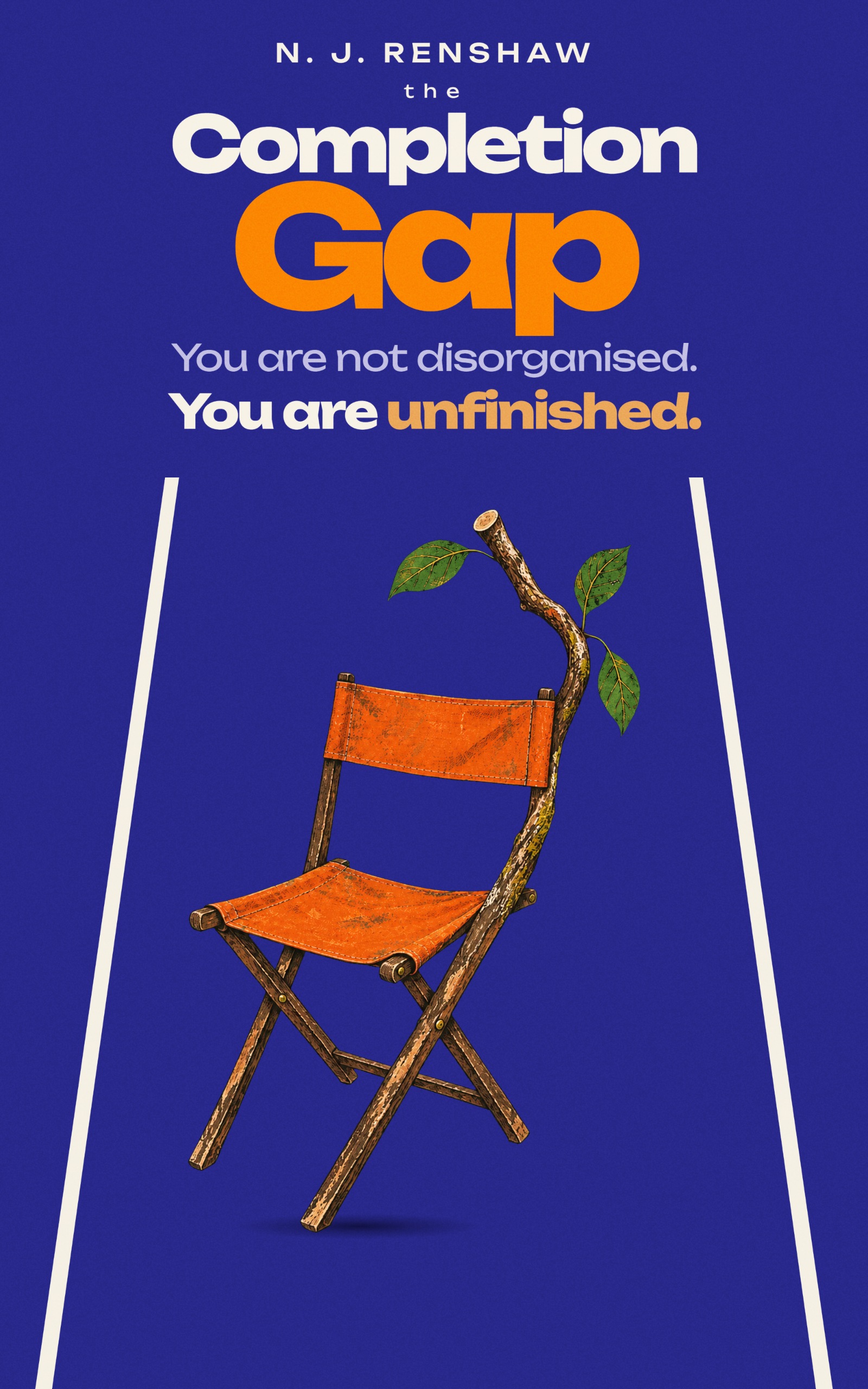 View the Kindle edition on Amazon (opens in a new tab)
AuthorN. J. Renshaw
Published21 August 2026
FieldAI-assisted work
QuestionCan the work travel?
A fluent draft can still be unusable.
The completion gap is the distance between work that looks complete and work another person can inspect, accept, and use.
The draft exists. The responsibility has not crossed.
Four states. One missing handoff.
A file can move through all four. Confusing them is how polished work stays lodged in somebody’s head.
- Produced
- The artifact exists.
- Checked
- The claims, sources, and open assumptions can be inspected.
- Accepted
- A named person can approve it—or stop it visibly.
- Usable
- Someone else can act without reconstructing the work’s hidden history.
What the book puts back into the work.
- Name the next accepted state. Define what another person must be able to recognise before another task steals the sequence.
- Keep evidence with the claim. Stop forcing the reviewer to become the file’s archaeologist.
- Make ownership visible. Use AI for bounded work without letting fluent prose hide human judgment.
- Give the work a truthful stop. Finished / Carried / Return records what crossed, what remains alive, and where it resumes.
ONE CONSEQUENTIAL WORKING WEEK
The document looks finished. Daniel still cannot accept it.
Sarah’s AI-assisted comparison arrives before the judgment behind it. A source trail is missing. A changed freight basis enlarges the correction. The reviewer needs a decision, not another polished draft.
Responsible completion may end in acceptance. It may also end in a visible stop with a named return.
Read the opening on Amazon (opens in a new tab)Open the record.
Choose a reading route. No affiliate links.
More finished. Less carried.